
Meetings are happening.
Progress isn’t.
I help teams surface and resolve the tensions they’re avoiding before it costs them performance, trust or talent.

You’ve done everything right.
You’ve built a strong team, set clear goals, invested in tools, training — even AI.
On paper, everything works.
In the room, something doesn’t.
🌀 Conversations loop.
🚧 Projects stall.
⏳ Momentum leaks — even when everyone is trying.
You can see the potential.
There’s talent and insight in the room — but it’s not translating into real collaboration, ownership, or progress.
The real conversation isn’t happening.
What’s left unsaid — tension, hesitation, disengagement — is what ends up driving the outcome.
And no matter how hard you try to lead… it still feels like you’re the one pushing things forward.
This is not random. And it’s not your team.
It’s how the conversation is happening.
Because somewhere along the way, the room adapted around what felt too much, unsafe, unresolved, or too costly to say.
People started protecting themselves instead of speaking honestly.
The group slowly disengaged instead of thinking together.
Conversations skimmed the surface instead of staying with what mattered.
And leaders ended up absorbing more and more of the pressure to keep things from falling apart.
Not all at once.
Just slowly enough that it became normal.
What helps a team to start moving again?
Facilitation
Changing human dynamics in real time

Human dynamics shape every organization. Meetings are where these human dynamics become visible.
And these dynamics don't change because people suddenly understand them.
They change when people experience a different way of working together.
This is what facilitation does. It changes the conditions under which people think, speak, challenge ideas, make decisions, and build trust.
Because human dynamics don't live in company documents.
They live in conversations that unfold in real time, shaped by who speaks, who doesn’t, what’s avoided, what’s assumed, and how safe it feels to think out loud together.
Facilitation powerfully changes how people experience the conversation—so the group can think more clearly, move through tension, and keep momentum.
This isn’t about controlling the room or adding energy.
It’s about creating the conditions that allows people to stay in the conversation enough to think clearly together — especially when the topic is difficult, tense, or unresolved.
Curious why the usual fixes dont help much?
Check out our blog :
→ Why an agenda is not a guarantee
Because when teams can stay with the real conversation instead of protecting themselves from it, something shifts:
Conversations stop looping and start landing
Decisions become clearer — and stick
Tension is addressed before it derails momentum
Participation broadens beyond the loudest voices
Leaders stop carrying the room alone
And the team starts rebuilding its ability to navigate complexity together.
👉 It is the same people, in the same room, learning how to work through difficult things— together.

When Facilitation changes everything
“I feel like I’m the only one pulling forward.”
Leadership shouldn’t feel like dragging everyone forward alone.
When one person carries the thinking, the alignment, and the emotional load, progress becomes exhausting — and fragile.
👉 Facilitation redistributes the weight, activating the collective intelligence of the group so ownership, insight, and momentum are shared.
Leaders often say:
“It finally felt like the team was moving with me — not behind me.”
“We talk a lot, but we’re not getting to what actually matters.”
Many meetings sound productive on the surface — timelines, tasks, updates — while the real drivers stay unspoken underneath.
👉 Facilitation helps teams go beneath the surface safely, naming what’s actually shaping the work so it can be addressed without blame, tension, or things blowing up.
Teams often reflect:
“That was the first time we talked about what was really going on.””
“This matters too much to leave it to chance.”
The stakes are real — reputational, relational, strategic.
And the cost of getting it wrong ripple far beyond this room.
👉 Facilitation holds the process steady so the group can face reality together and choose a way forward with clarity, care, and commitment.
Teams often say:
“That needed to happen — and it went better than expected.”
Think this is what you're looking for ?
About Helen & Co
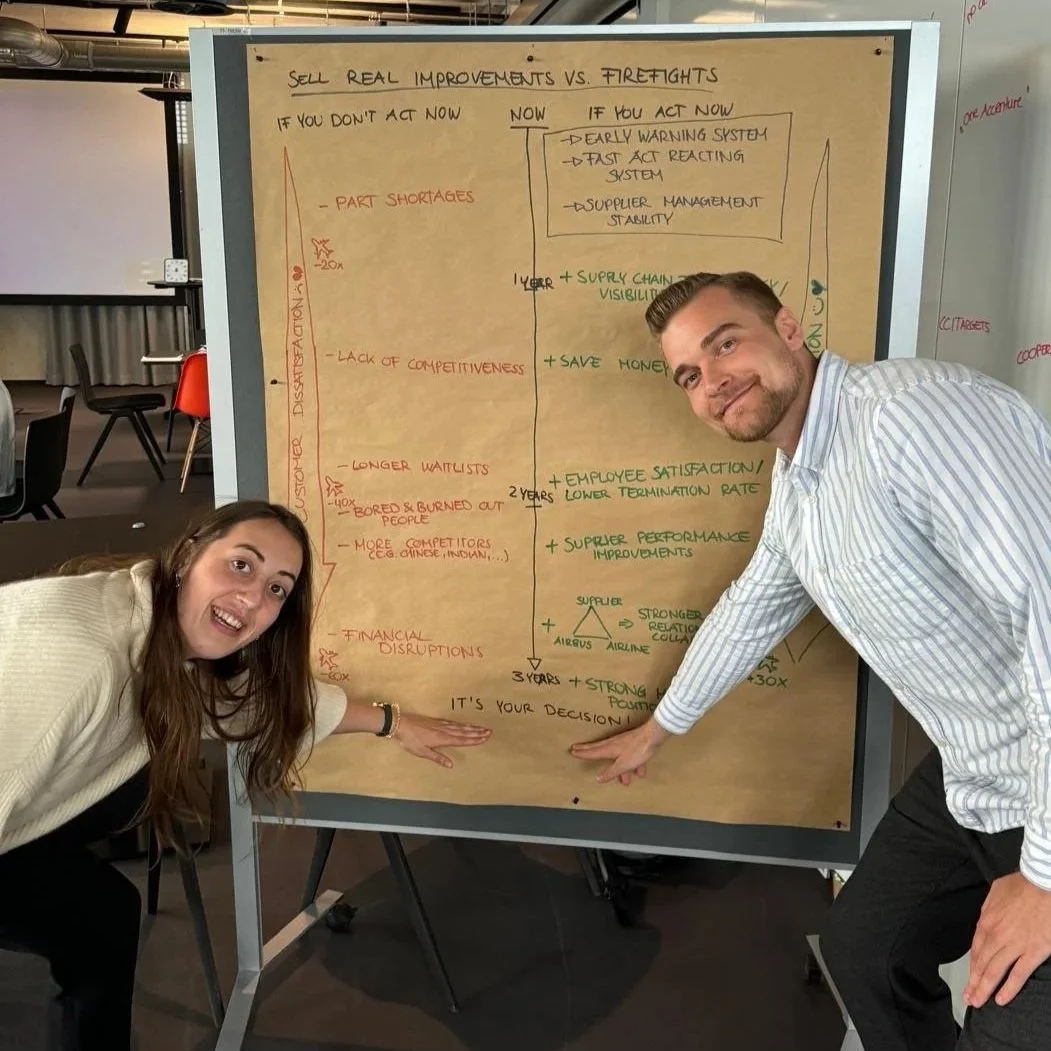
I work with leaders and teams to have the conversations that actually matter without drama.
The ones that don’t resolve themselves through more meetings, better slides, or polite agreement but quietly influence decisions, momentum, trust, and results.
My work stands at the intersection of strategy, facilitation, and human behavior — creating the conditions for honest conversations, clean decisions, and real progress across teams, hierarchies, and perspectives.
Because when emotional friction is reduced, decisions move faster, collaboration feels lighter, and meetings finally support progress and flow instead of draining it away.
Curious how it all started ?
Testimonials
Frequently
asked
questions
-
None of the above — and a bit of all three.
Facilitation focuses on how people work together in real time.
I don’t tell teams what to think or do. I structure the process so clarity, decisions, and alignment can actually emerge.
-
Great question ! I have a full blog post on this, but here is the summary.
Workshops are a type of meeting.
Facilitation is a way to run any meeting.
It focuses on human dynamics: who speaks, who doesn’t, what’s unsaid, and how decisions really get made.
That’s why clients often say :
“We’ve talked about this before… but this felt completely different.”
-
Not at all — it usually does the opposite.
I have a full blog post on this, but here is the breakdown.
Being a leader was never supposed to mean that you are the one carrying everything alone.
Leaders take care of the vision and the direction of the meeting.
A facilitator take care of the process — the flow, the dynamics, the participation — so the leader doesn’t have to hold everything at once.
Think of me like a co-pilot, I am not here to drive for you. I am here to give you directions so that you don´t crash the car while looking at the map.
Most leaders tell me it feels like finally having their hands free again.
-
Whether you start with a discovery call or jump in directly with a booking inquiry, the process unfolds like this:
You reach out 💭
You share what’s going on and what you’d love to see change.We talk 🤝
We make sure we’re aligned — on context, outcomes, dates and whether this is the right fit during the customization call.I send a proposal (optional)
If you need it for internal conversations or approvals, I formalize what we talked about in an official proposal.I send the digital contract + invoice 📝
I formalize all the details and expectations in a digital contract. Once you accept, I send you the official invoice and payment link.
You’re officially booked 🎉
Once the contract is signed and payment is received, you are officially on the H&Co calendar ! *
I craft the experience behind the scenes ✨
I reverse-engineer and craft the experience most likely to bring you and your team towards your goal.I send you the game plan 👾
You receive a clear, meeting overview and agenda 2–3 days before the session so that you know what to expect.We go live ! 🎬
We get to work — live, focused, and very human.
Simple, structured, and designed to keep everybody calm all the way through 😎
*Note :
Signed Contract + Payment are due at least 10 days before the first session
Cancelled bookings are fully refundable at 14 days notice.
One free reschedule is automatically included with each booking
-
Internal teams usually want to support initiatives like this — they just need it framed in language that speaks to their priorities.
So you might need to translate it for them.
Facilitation supports things internal teams already care deeply about:
Better, faster, clearer decisions
→ Less rework, fewer escalations, stronger accountabilityFewer wasted meetings
→ Research shows between 30–72% of meetings are considered ineffective.→ AKA, most people waste about half of their work week in bad meetings
→ A 2h meeting for a team of 5 ≈ focus session with me.
This adds up quick ! 💰
Stronger leadership effectiveness
→ Leaders spend less time managing dynamics and more time leading (leadership attention is scarce and expensive, remember the math)Inclusion and psychological safety
→ Helps organizations live up to the diversity and inclusion commitments they’ve already made — not just document themI have downloadable guides ready on the blog but if you are still stuck, I’m happy to:
Adjust contractual language to fit procurement or legal requirements
Join a brief approval call to answer questions directly
The goal isn’t to add another layer of complexity — it’s to make everyone’s job easier.
Yours and theirs.
-
YES. Always.
All facilitation work is confidential by default and can be covered by an NDA if needed.
If this is what you’re dealing with — we should talk.
Sometimes teams don’t need another meeting.
They need space to work through what they already knows is there.
Not every conversation starts with facilitation.
Sometimes it starts with seeing the pattern more clearly.
Join the H&CO note
Where the conversation goes deeper.
Every two weeks, I share thoughtful reflections and tips to help you navigate the hidden human dynamics shaping your team, your organization, and the way people work together.
It's a quiet place to notice, readjust, and return to your work with greater clarity.